yossio Stephen M. Yoss, CPA
Home Articles
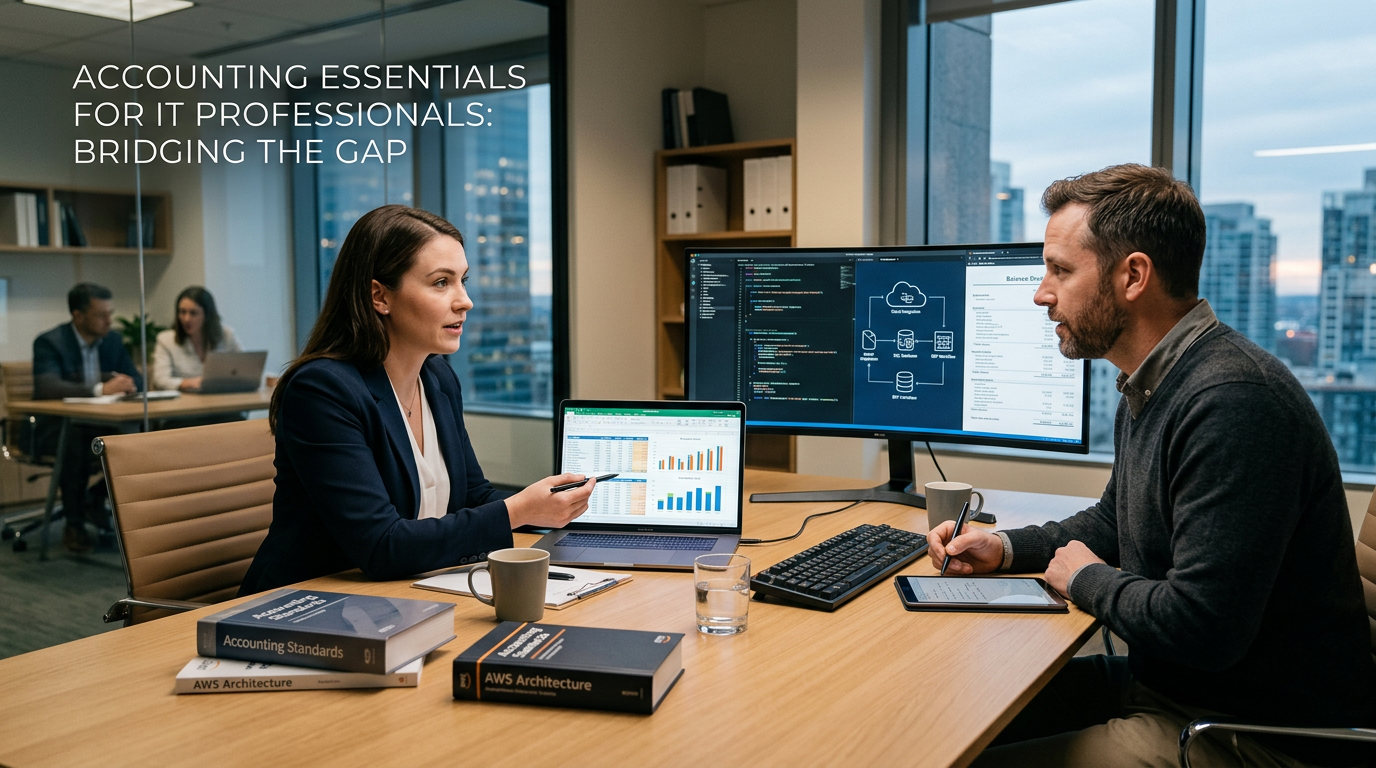
Accounting Concepts for Technology Professionals — course hero graphic

Accounting Concepts for Technology Professionals

📋 Overview

Ever had an accountant push back on a "simple" change and wondered why? This course is the translation guide. Taught by a CPA who also writes code, it skips the debits-and-credits drills and goes straight to the ideas behind the requirements finance hands to technology: why a fraction of a cent can matter, why a timesheet is audit evidence, why you can't just rerun last month, and what "the books are closed" really means. Participants explore materiality, the chart of accounts as the schema of the business, historical cost versus fair value, software capitalization, period close, error correction, intercompany activity, and the two oldest controls in accounting: reconciliation and segregation of duties. The session finishes where internal controls and information security turn out to be two sides of the same coin, including what changes when a bot or AI agent posts the entry. Expect real-world scenarios, quick knowledge checks, and a practical set of questions to bring to any project that touches financial data.

👥 Who Should Attend

IT Managers, Software Developers, Systems Analysts, ERP Consultants, and Technical Project Managers who collaborate with finance and accounting departments.

Prerequisites
None
Advanced Prep
None

🎯 Learning Objectives

🚀 What You'll Walk Away With

📚 Major Topics

  1. Materiality: quantitative and qualitative, aggregate errors, and tolerance thresholds
  2. The chart of accounts as the schema of the business: accounts, dimensions, mapping, and substance over form
  3. Historical cost vs. fair value: the fair value hierarchy, realized vs. unrealized gains, and conservatism
  4. Capitalize vs. expense, tech edition: internal-use software, ASU 2025-06, and cloud/SaaS implementation costs
  5. Period close: the close cycle, cutoff, trade vs. settlement date, and period locks
  6. Changing history, changing rules: out-of-period adjustments, revisions, restatements, and consistency
  7. Intercompany and consolidation: legal entities, eliminations, and why intercompany balances break
  8. The two oldest controls: reconciliation and segregation of duties in technology roles
  9. Controls and security: audit assertions, IT general controls, IPE, SOC 1 reports, and records retention
  10. Automation and AI: bots as users, logic changes as program changes, and evidence of human review

🏷️ Topics

AccountingITInternal ControlsSecurityMaterialityFair ValueSoftware CapitalizationPeriod CloseConsolidationSegregation of Duties

❓ Questions

Is this a basic accounting course?

No. The course assumes a general familiarity with the accounting equation and financial statements. Rather than re-teaching debits and credits, it explains the concepts behind the requirements finance teams give to technology teams.

Is this course specific to a certain ERP software like SAP or Oracle?

No. The concepts apply to any financial system you might build, maintain, or support.

How will this help me in my daily work as a developer or analyst?

You'll understand the reasoning behind requests for time tracking, change freezes, reconciliations, access restrictions, and audit evidence, which makes it easier to design systems that meet those needs from the start.

Will we cover tax preparation or detailed journal entries?

No. The session stays at the concept level and focuses on what each principle means for the systems you work with.

Are there any prerequisites I should complete before starting?

There are no formal prerequisites or advance preparation. A basic understanding of the accounting equation and the primary financial statements will help you get the most from the session.

🗂️ Course Details
Course ID
2192
Short Name
Accounting Concepts for Tech
Created
2026-06-11
Last Updated
2026-09-26

✍️ A Note from the Author

I've spent years watching brilliant technical teams struggle to build financial tools because the underlying logic felt like a foreign language. I wrote this course for the developers and analysts who want to stop treating the general ledger as a black box. My goal is to help you understand the 'why' behind the ledger so your systems actually reflect the business reality.

🎤 About the author

Stephen M. Yoss, CPA

Stephen is a certified public accountant, the CEO and partner of Devmatics, LLC, a continuing education instructor for financial professionals, a professional speaker at live events, and a licensed pyrotechnician. While his interests and skills are varied, they all share a common thread—his love for and skill in finding technology-based solutions. Whether it’s teaching in the classroom, consulting clients in a boardroom, or shooting a fireworks display, Steve brings passion, hard work, value—and above all else—technological expertise to each of his clients. With an open, honest approach, he creates a unique strategy for each client specifically designed to benefit their needs and streamline their operations in order to create efficiency and maximize their financial potential.

Share

Interested in this course?

Reach out for more information or to bring this training to your organization.