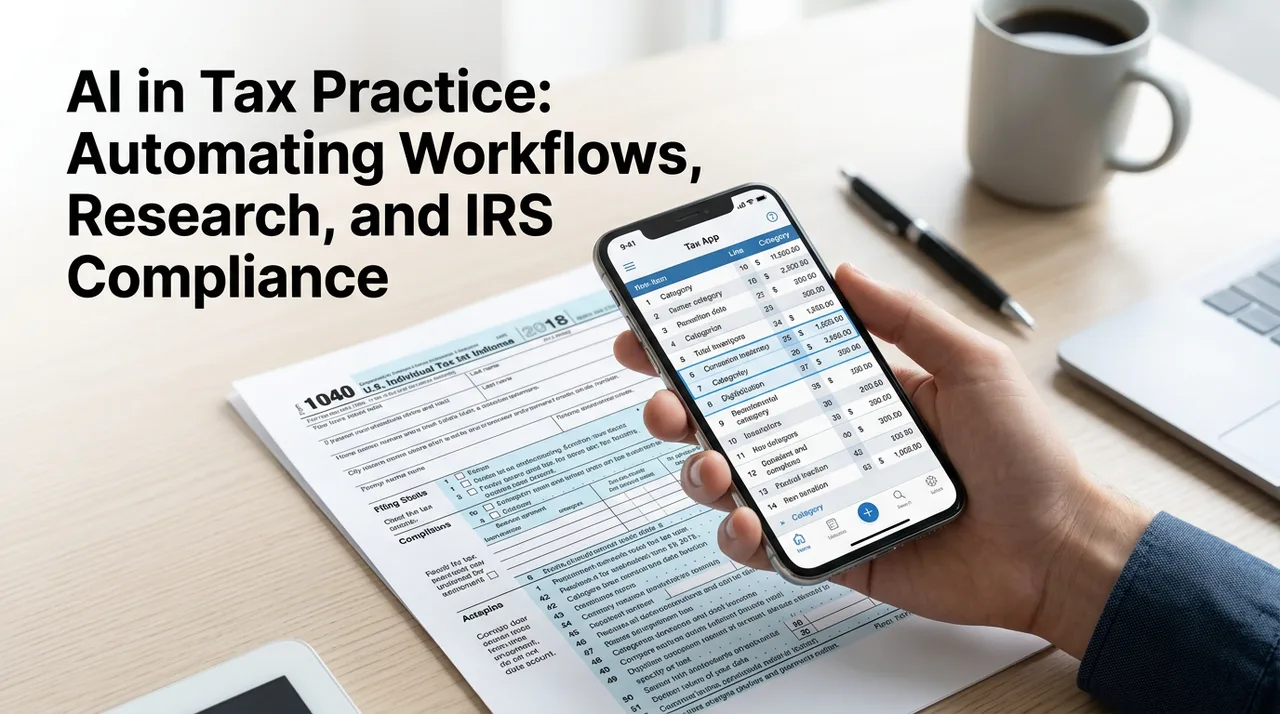
In most tax practices, the hours don't go into the technical judgment clients pay for. They go into everything around it: chasing documents, keying data, digging through research, answering the same client questions, and writing letters to the IRS. That's exactly where AI has become practical. Used well, it pulls information from client documents, speeds up research, drafts clear client emails and explanations, and produces a solid first draft of a notice response, leaving the professional to review, correct, and sign off. This session shows how AI fits into the daily work of a public accounting tax practice, with a practitioner's eye on where it helps and where it still needs a human. Every example comes from real tax practice work, not a technology demo. You'll see AI applied to the tax workflow from intake to review, used to research a question and verify the answer against primary sources, and put to work on the client communication and IRS correspondence that eat up so much of the season. You'll also learn how to review AI output before it reaches a client or the IRS. You'll leave with practical workflows you can use in your next filing season and a review checklist for AI-assisted work.
Tax partners, managers, and staff accountants who handle tax research, preparation, and IRS controversy work for individuals and business entities.
No. This is a basic level course designed for tax professionals who want to use these tools in their daily workflow without writing a single line of code.
We cover the key stages of a tax engagement, including document intake, data extraction, research and verification, client emails, and drafting responses to IRS notices.
It isn't. We focus on practical workflows based on real tax practice work rather than high-level technology demos.
Accuracy is a major focus. You'll learn how to evaluate AI-generated work for completeness and how to verify research against primary tax sources.
It's built for tax partners, managers, and staff accountants. If you handle tax research, preparation, or IRS correspondence, you'll find these workflows useful.
I spent years watching my best staff lose their days to document chasing and basic research instead of the complex tax strategy they were hired to perform. I wrote this course because the tools finally exist to offload that manual labor, provided you know how to supervise them. We'll look at how to bring AI into your firm without sacrificing the technical accuracy your clients expect.
Reach out for more information or to bring this training to your organization.
Interested in bringing this training to your team, or want more information? Send a note and we’ll get back to you.