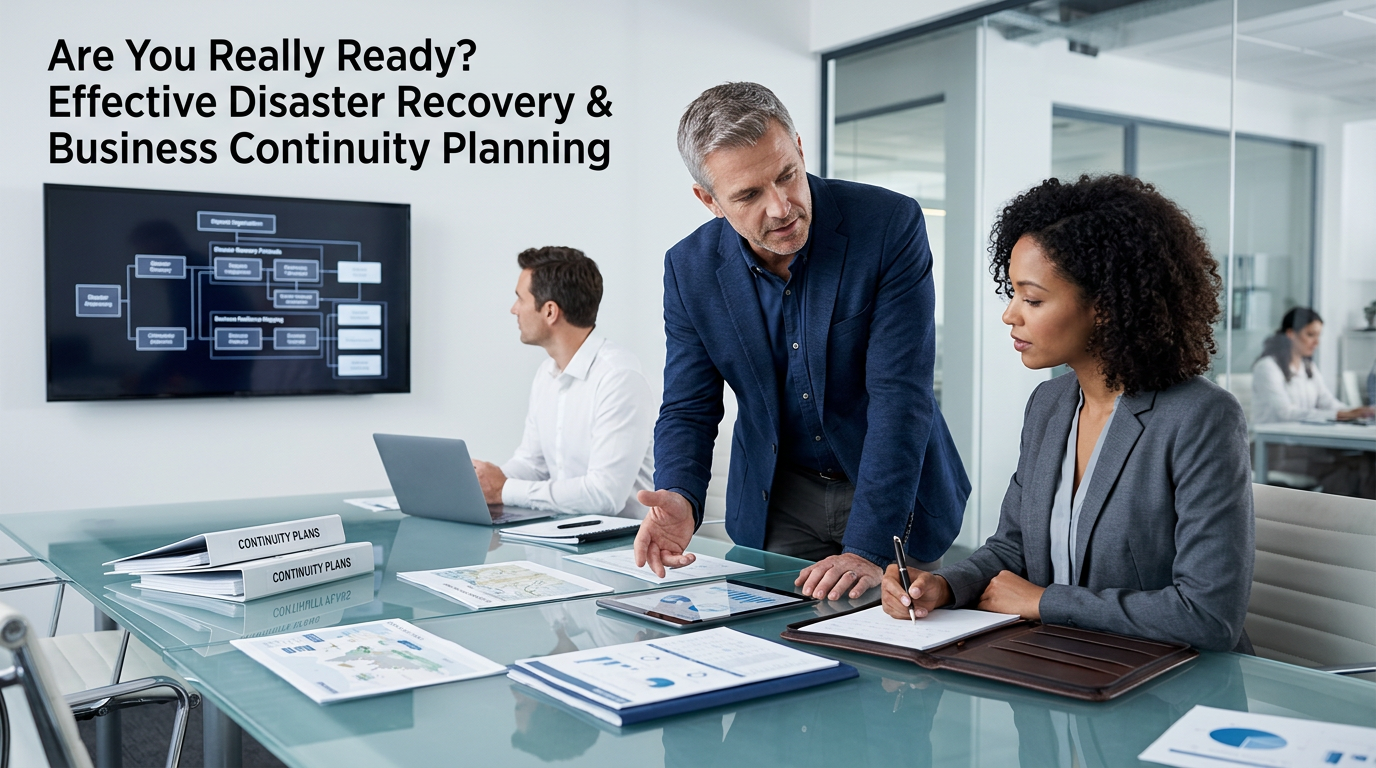
Disaster can come in many forms, from a flood to a data breach, to the death of a critical member of your team. When a disaster happens, it is never at a convenient time. It doesn’t matter if it is the holidays, right before your vacation, or at the end of a grueling busy season. It just happens and you’re left to pick up the pieces. The first 24 hours of a disaster are the most critical. How are you going to get back online? How are you going to organize a safe work environment for your staff? How are you going to communicate what has occurred and what you are doing to resolve it to your stakeholders? An organization that is without its data or communications for a prolonged period has a significant risk of going out of business. Every minute of downtime is lost productivity, a missed deadline, or a forfeited opportunity. It isn’t a matter of if a disaster occurs, but when it does occur how you will respond. This course will discuss a wide range of disasters from acts of God to man-made calamities, including data breaches and employee maleficence. It offers insight into the major risks, their causes, methods for mitigation of risks, and recommendations for resolution. It will have a detailed discussion on how using technology effectively can help minimize and hedge business risk and ensure continuity of operations. It will examine best practices for data security, the use of hot/cold sites, how to ensure that data is properly backed up, utilizing the Cloud for enhanced redundancy, and more. It is a good course for any organization that is concerned about the continuity of operations and surviving a disaster.
No, this is a basic level course that doesn't require prior technical expertise. We focus on how to use technology as a tool for business continuity rather than deep-level engineering.
We look at a broad spectrum ranging from natural acts of God to man-made issues like data breaches and employee maleficence. The goal is to prepare you for any event that halts your operations.
Yes, you'll learn how to identify major risks unique to your organization and develop recommendations to mitigate those specific exposures. It provides the framework for a tailored disaster recovery plan.
The course includes an analysis of the financial, environmental, and societal impacts a disaster has on an organization. Understanding these costs is vital for justifying the investment in recovery resources.
There's no advanced preparation or prerequisites needed for this course. It's designed to be accessible for any professional concerned about their organization's ability to survive a crisis.
I wrote this course because I've seen too many organizations realize they don't have a plan only after the water starts rising or the servers go dark. It's easy to assume your backups are enough until you're actually forced to use them under pressure. This is for the professionals who want to stop reacting to emergencies and start building a resilient operation that survives the unexpected.
Reach out for more information or to bring this training to your organization.
Interested in bringing this training to your team, or want more information? Send a note and we’ll get back to you.